
Vintage jewelry should almost never be cleaned the same way as modern jewelry.
That is one of the most important things to understand before using ultrasonic cleaners, harsh chemicals, polishing cloths, or even common at-home jewelry cleaners. Older pieces often contain softer gemstones, antique settings, hand engraving, delicate filigree, aged solder joints, or patina that can easily be damaged by aggressive cleaning methods.
The safest approach is usually gentle cleaning with lukewarm water, a soft brush, and careful drying — but even that depends on the piece. Estate rings from the Art Deco period, Victorian lockets, antique opal jewelry, old European cut diamonds, and vintage platinum mountings all age differently and require different levels of care.
In Columbus, we often see clients unintentionally damage heirloom jewelry simply by treating it like a modern everyday piece. Proper maintenance is less about making vintage jewelry look “new” and more about preserving the character, craftsmanship, and structural integrity that make it valuable in the first place.
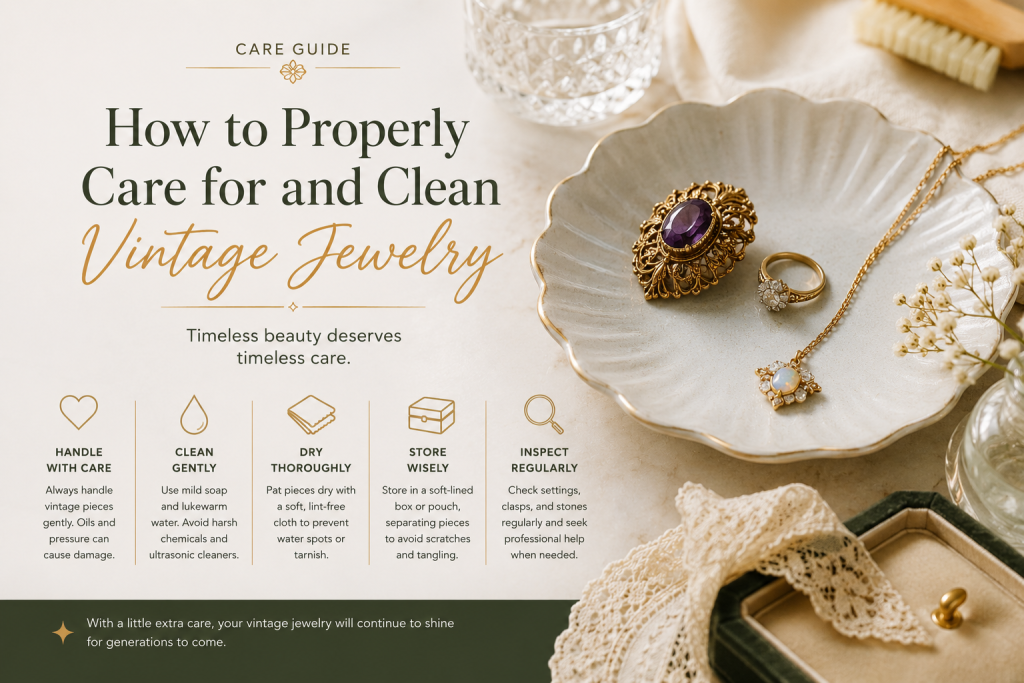
Why Vintage Jewelry Requires Different Care
One of the biggest misconceptions about estate jewelry is that age automatically means fragility.
That is not always true.
Many vintage and antique pieces were exceptionally well made. However, older jewelry was often constructed using techniques, gemstones, and settings that respond differently to heat, moisture, chemicals, and impact compared to contemporary jewelry.
For example:
- Old European cut diamonds may sit in delicate handmade prongs.
- Antique emerald rings often contain inclusions that make them more sensitive to pressure.
- Opals, pearls, turquoise, and coral can react poorly to moisture or chemical exposure.
- Vintage white gold may have thinner rhodium layers than modern pieces.
Because of this, cleaning methods that work perfectly for a modern diamond engagement ring may not be appropriate for estate jewelry in Columbus or heirloom pieces passed through generations.
What You Should Avoid Immediately
Before discussing proper cleaning methods, it helps to understand what causes the most accidental damage.
The most common issues we see include:
- Ultrasonic cleaners loosening antique stones
- Toothpaste scratching metal surfaces
- Steam damaging porous gemstones
- Chemical jewelry dips stripping patina or oxidization
- Over-polishing removing fine engraving details
- Harsh brushing damaging filigree or milgrain work
From The Jeweler’s Bench
One of the hardest parts of restoring vintage jewelry is reversing damage caused by aggressive cleaning attempts. In many cases, the issue is not age — it is over-cleaning.
The Safest Way To Clean Most Vintage Jewelry At Home
For many estate pieces, less is more.
A practical rule jewelers use is to start with the gentlest method possible before attempting anything stronger.
For most vintage jewelry, this usually means:
- Fill a small bowl with lukewarm water.
- Add a small amount of mild dish soap.
- Let the piece sit briefly — not soak for extended periods.
- Use a very soft baby toothbrush or makeup brush.
- Pat dry carefully with a lint-free cloth.
Avoid scrubbing aggressively, especially around:
- Prongs
- Hand engraving
- Filigree
- Milgrain details
- Delicate gemstone edges
And importantly — never clean vintage jewelry over an open sink drain.
Which Vintage Gemstones Need Extra Care
Certain stones require significantly more caution than others.
| Stone | Care Level | What To Avoid |
| Opal | Very High | Heat, chemicals, soaking |
| Pearl | Very High | Ultrasonic cleaners, acids |
| Emerald | High | Steam, harsh impacts |
| Turquoise | High | Moisture, chemicals |
| Diamond | Moderate | Loose antique settings |
| Sapphire | Lower | Aggressive abrasives |
This becomes especially important with estate engagement rings in Columbus, where many older pieces combine multiple gemstone types within one mounting.
Care Tip
If you are unsure whether a gemstone is stable enough for cleaning, stop before experimenting. Vintage jewelry often reacts unpredictably to modern cleaning products.
Why Patina Is Not Always A Problem
Many people assume older jewelry should look perfectly polished.
But in vintage jewelry, some surface character is often desirable.
Light patina on gold, softened edges on engraving, or slight darkening in recessed areas can help preserve depth and historical detail. Over-polishing antique jewelry can sometimes reduce both visual character and collector value.
This is especially true for:
- Art Deco platinum rings
- Victorian lockets
- Antique yellow gold bands
- Hand-engraved estate jewelry
In our showroom, clients are often surprised to learn that preserving original detail is usually more important than making a piece appear brand new.
How Often Vintage Jewelry Should Be Professionally Checked
Even if a piece looks secure, older jewelry benefits from regular inspections.
A practical recommendation is to have vintage rings and frequently worn pieces checked approximately once a year.
This becomes especially important for:
- Prong tightening
- Worn shanks
- Loose accent stones
- Hairline fractures
- Weak solder joints
And in Columbus, seasonal temperature changes can sometimes affect metal expansion and gemstone security more than people expect.
Cleaning Vintage Jewelry Before Travel Or Events
One situation many people overlook is preparing heirloom jewelry for weddings, travel, or formal events.
Before wearing older pieces regularly, it helps to check:
- Stone security
- Clasps
- Bracelet hinges
- Earring backs
- Chain integrity
Especially with estate jewelry, preventive maintenance is often much easier than major restoration later.
Collector’s Note
Vintage jewelry was made to be worn and enjoyed — but pieces that have lasted generations usually did so because someone cared for them consistently along the way.
When Professional Cleaning Is The Better Choice
Some jewelry should not be cleaned at home at all.
We typically recommend professional evaluation first for:
- Antique opals
- Enamel jewelry
- Delicate filigree
- Multi-stone estate rings
- Jewelry with visible movement or loose stones
- Pieces with unknown repair history
This is particularly important with heirloom jewelry, where sentimental value often matters just as much as monetary value.
A professional cleaning also allows jewelers to identify issues before stones loosen or damage progresses further.
The Perspective Many Vintage Jewelry Owners Eventually Share
One of the most interesting things about estate jewelry is that people often begin caring for it differently over time.
Initially, many owners focus on making the piece look brighter or newer.
Eventually, the priority shifts toward preservation — protecting craftsmanship, maintaining original detail, and ensuring the piece can continue being worn for decades to come.
That perspective tends to change how people clean, store, and wear vintage jewelry entirely.
Conclusion
Properly caring for vintage jewelry is less about restoring perfection and more about preserving craftsmanship, history, and wearability.
The safest approach is usually gentle cleaning, careful handling, and knowing when professional attention is the better option — especially for estate rings, antique gemstones, and heirloom pieces with delicate construction.
At Argo & Lehne Jewelers, we have helped care for estate and vintage jewelry in Columbus for generations. Whether you need guidance on cleaning an heirloom piece, restoring a vintage engagement ring, or evaluating the condition of estate jewelry, a private appointment can help you protect the character and longevity of the jewelry you value most.


