
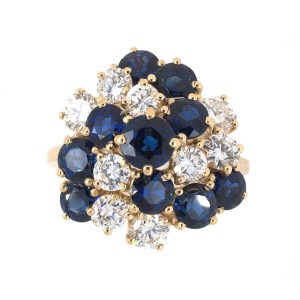
Vintage 18K yellow gold sapphire diamond cluster ring.
Sapphire: The September Birthstone
September’s birthstone is a gem with a fascinating dual personality. At once timeless and regal, sapphire is familiar but full of surprises. Most often associated with deep, velvety blue, sapphire actually occurs in an extraordinary range of colors—and has been treasured for centuries for its beauty, durability, and symbolism.
Set in an engagement ring, an elegant pair of earrings, or a treasured vintage jewel, sapphire has a way of being both classic and distinctly personal.
What Is the September Birthstone?
Sapphire is a variety of corundum, a crystalline form of aluminum oxide. Interestingly, ruby is also corundum. Red corundum is called ruby, while other corundum in other colors is sapphire.
Though blue is most closely associated with sapphire, these remarkable gems can also be found in pink, yellow, green, purple, orange and other hues.
Blue sapphire, however, remains the classic—and for good reason. Its combination of intense color, brilliance and exceptional durability has made it one of the world’s most beloved gems.
What Does Sapphire Symbolize?
For centuries, sapphire has represented such as wisdom, loyalty, truth, faithfulness and protection. Its blue has also inspired associations with the sky and heavens, giving the gems an almost mystical quality.
This symbolism may explain sapphire’s enduring popularity in important jewelry. A sapphire represents devotion and fidelity, making it especially meaningful in engagement rings and anniversary jewelry.
Of course, symbolism is only part of the story. Sometimes a sapphire is simply irresistible because of its color.
A Gem Steeped in History
Sapphire has been admired for thousands of years. Ancient civilizations attributed protective and spiritual qualities to blue gems, and sapphire became closely associated with royalty and ceremonial jewelry.
Its royal reputation continues today. Perhaps the world’s most famous sapphire ring is the engagement ring originally given to Princess Diana and later worn by Catherine, Princess of Wales. This sapphire’s striking blue surrounded by diamonds helped secure sapphire’s place in the modern imagination.
Historic jewels such as these demonstrate something wonderful about sapphire: it can be fashionable in one era and completely timeless in another.
Why Is Sapphire Blue?
The color of sapphire comes from tiny amounts of trace elements within the crystal. In blue sapphire, iron and titanium are key to producing its characteristic color.
Since the exact combination and concentration of these elements varies, so does the appearance of the gems. Blue sapphires ranges from delicate, lighter blues to intensely saturated shades approaching midnight.
Color is the first thing we notice about a sapphire—and the most important consideration in evaluating its quality and beauty.
Sapphire Comes in Every Color of the Rainbow
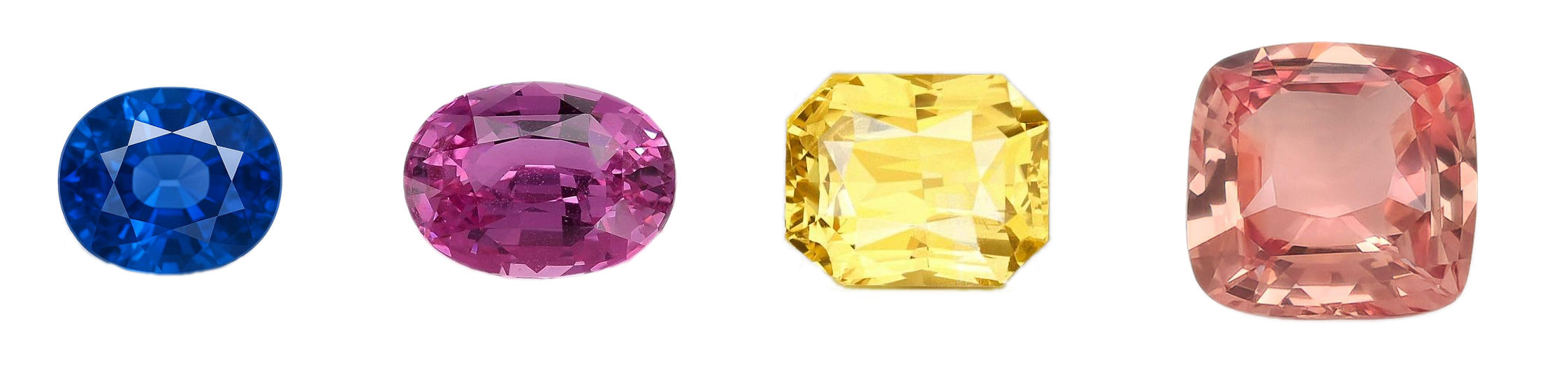
Blue, pink, yellow & Padparadscha sapphires
One of sapphire’s best-kept secrets is its remarkable color range.
Pink sapphires range from soft blush tones to vivid pinks. Yellow sapphires offer sunny, golden hues, green sapphires are wonderfully subtle and earthy. Purple and orange sapphires offer still more possibilities.
Then there is the rare and extraordinarily romantic Padparadscha sapphire, prized for its delicate combination of pink and orange. Its name comes from a Sinhalese word associated with the color of a lotus blossom. Padparadscha was cited in literature for centuries but never experienced until modern technology brought out this hidden asset.
These non-blue varieties are often called fancy sapphires—a reminder that when it comes to sapphire, blue is only the beginning.
What Makes a Sapphire Valuable?
Like all fine gems, sapphire is evaluated by several characteristics. No single factor that determines if one sapphire is more beautiful or valuable than another.
Color
Color is the most important consideration. Fine blue sapphires are prized for attractive hue, tone and saturation, with vivid, well-balanced color particularly desirable.
Clarity
Natural sapphires commonly contain inclusions. Rather than making a sapphire less desirable, these characteristics can provide clues about its natural origin and history.
Cut
A well-executed cut allows a sapphire’s color and brilliance to shine. Proportions, symmetry and orientation of the crystal all influence the finished gem.
Carat Weight
Larger sapphires of exceptional quality are quite rare. But as with other gems, size alone doesn’t determine beauty or value.
Is Sapphire Durable?
One of sapphire’s greatest practical advantages is its durability.
Sapphire ranks 9 on the Mohs hardness scale, second only to diamond. This makes it an excellent choice for frequently worn jewelry—especially rings.
Its durability doesn’t mean it is indestructible, however. Fine jewelry benefits from thoughtful care, particularly when gems are set in delicate or intricate vintage creations.
Natural Sapphire, Treatments & Laboratory-Grown Sapphire
When purchasing a sapphire, it is helpful to understand its story.
Many sapphires cut today have been heated to improve their color and clarity. Heat treatment is a longstanding and widely accepted practice in the gem world, but it is always important that treatments be disclosed.
Natural, untreated sapphires are especially intriguing when they possess exceptional color and quality.
Lab-grown sapphires have been available for over a century. They have the same basic chemical composition and crystal structure as natural sapphire but are created by humans rather than by nature. Understanding this enables you to choose the gem that best fits your preferences and priorities.
Knowing more about a gem doesn’t diminish its magic—it makes owning it even more meaningful.
Sapphire Engagement Rings: A Beautiful Alternative
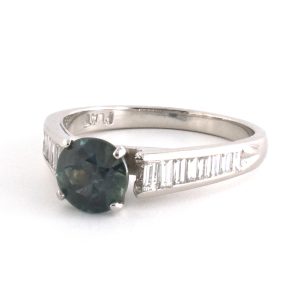
Platinum vintage Montana greenish-blue sapphire & diamond ring.
A sapphire engagement ring offers something wonderfully different while retaining all the qualities that make a fine engagement ring special.
Blue sapphire’s symbolism of loyalty and faithfulness particularly suits an engagement ring, while its durability makes it practical for everyday wear. Paired with diamonds, sapphire can be breathtaking.
If you prefer something less traditional, a pink, yellow or other fancy colored sapphire can create a ring that feels entirely personal.
Whether inspired by a historic royal jewel or simply by a love of beautiful color, sapphire makes an engagement ring full of character.
Caring for Sapphire Jewelry
Although sapphire is exceptionally durable, your jewelry will benefit from regular care.
Keep sapphire away from harsh chemicals and store it separately to help prevent scratches from other jewelry. Periodic professional cleaning and inspection are worthwhile, particularly for rings worn every day.
Professional inspection will catch loose stones or worn settings before a small concern becomes a larger problem – quarterly or annually depending on frequency and intensity of wear. Argo & Lehne offers cleaning and inspection at no charge.
Sapphire Jewelry for September Birthdays
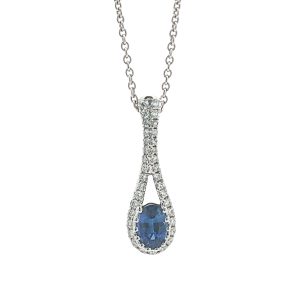
Elegant oval sapphire diamond pendant
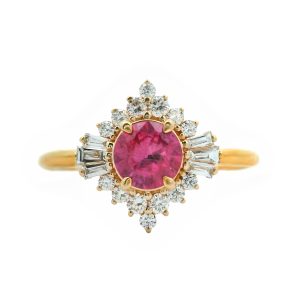
Stunningly exuberant pink sapphire diamond ring.
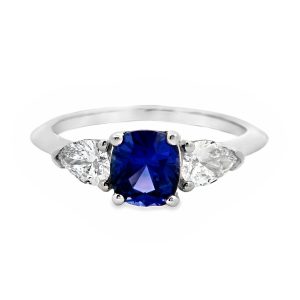
Platinum cushion shaped purple sapphire with pear shaped diamond sides.
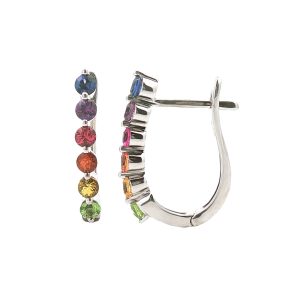
Sterling silver blue, purple, pink, orange, yellow & green rainbow sapphire oval hoops.
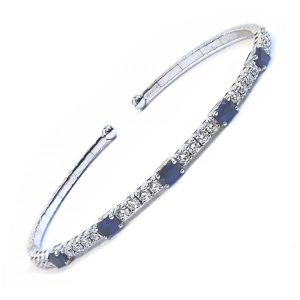
18K white gold oval sapphire & round diamond flexible cuff bracelet.
A Gemstone Worth Celebrating
There is something wonderfully appropriate about sapphire being September’s birthstone. Its beauty is sophisticated but unpredictable, and its history is long enough to fill volumes.
Royal or understated, traditional or unexpected, intensely blue or gloriously colorful, sapphire continues to captivate generation after generation.
For a September birthday—or simply for someone who loves beautiful gems—sapphire is a gift with a story, a symbolism and a beauty that can last for generations.
Come in and survey our extensive, beautiful sapphire collection or view it online.
If you’d like to explore available loose sapphires, perhaps to create your own unique custom design, check out our gem search page.


